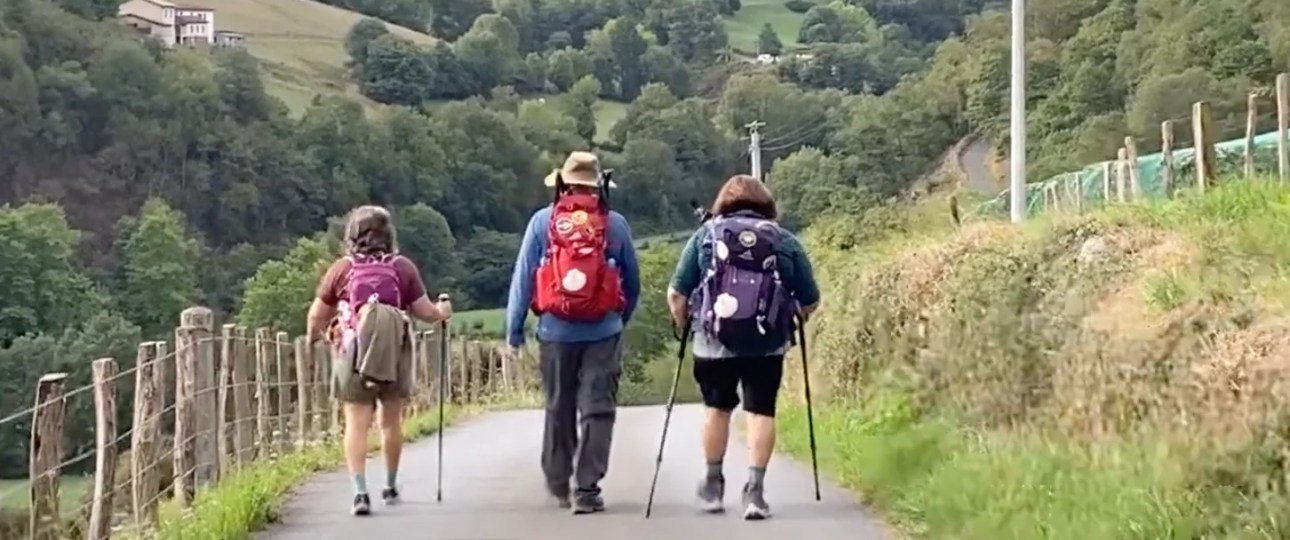
The Art of Pilgrimage, Departure!
The following is an excerpt from the Book, “The Art of Pilgrimage: The Seeker’s Guide to Making Travel Sacred… By Phil Cousineau. A great book and I highly recommend it!

“There are four roads,” begins the twelfth-century guidebook The Pilgrim’s Guide, “which, leading to Santiago, converge to form a single road at Puente la Reina in Spanish territory. One crosses Saint-Gilles, Montpellier, Toulouse, and the pass of Somport; another goes through Nötre Dame of Le Puy, Sainte-Foy of Conques, and Saint Pierre of Moissac; another traverses Sainte-Marie-Madeleine of Vézelay, Saint-Léonard in the Limousin, as well as the city of Périgueux; still another cuts through Saint-Jean-d’Angély, Sainte-Europe of Saintes, and the city of Bordeaux….” The purpose of this incantatory listing of place-names was to inspire the medieval pilgrims departing on their sacred but dangerous journeys and to give a measure of comfort that there was a world beyond theirs that could be mapped and measured.
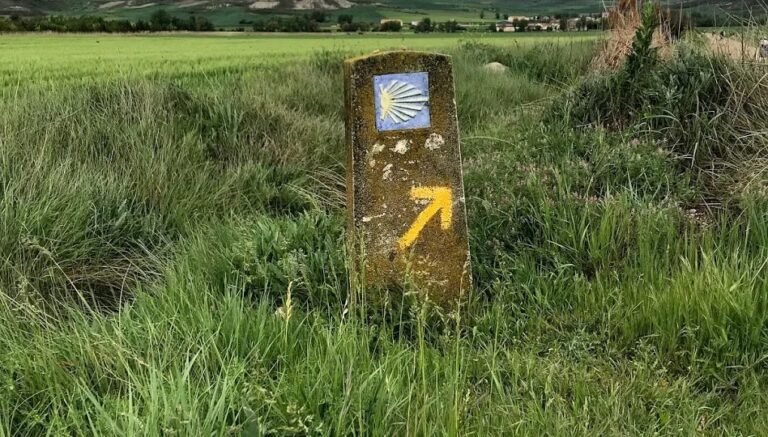
I’ve been fascinated with the Santiago pilgrimage ever since I became intrigued with the scallop shells I saw embedded in houses around Paris when I lived there in the late 1980s. Other than French aesthetics, I wondered why someone would display a shell on the lintel of their doorway or their windowsill. Over time, I’ve come to appreciate the motivation, realizing that my habit of displaying photographs and creating altars of travel souvenirs is scarcely different from the response of medieval travelers. The scallop shells were the proud symbols of returned pilgrims from the legendary shrine of Saint James the Apostle at Santiago de Compostela, in Galicia on Spain’s northwest Atlantic coast.

For medieval pilgrims, the journey had many meanings. The times were steeped in mysticism, rife with cultist devotion. Many of those departed with the hopes that coming into contact with the saint’s venerated relics would heal them; after all, Saint James was considered the thaumaturge, the miracle-maker. Others longed for self-purification, believing in the catharsis of an arduous journey and the merits of constant prayer. These sojourners met other kinds of pilgrims en route, including widely ostracized “false pilgrims” hired by others to make the journey for them, or criminals whose sentence was the penance of completing the pilgrimage. Common to all pilgrims was the sense of awakened wonder. The long and wearying way carried them through strange lands filled with stranger people, which allowed them to experience the wider world—probably for the first and only time in their lives. The pilgrims’ constant sense of surprise and astonishment at the ever-changing scenery, weather, and habits of others were as influential as the perils they had to overcome.
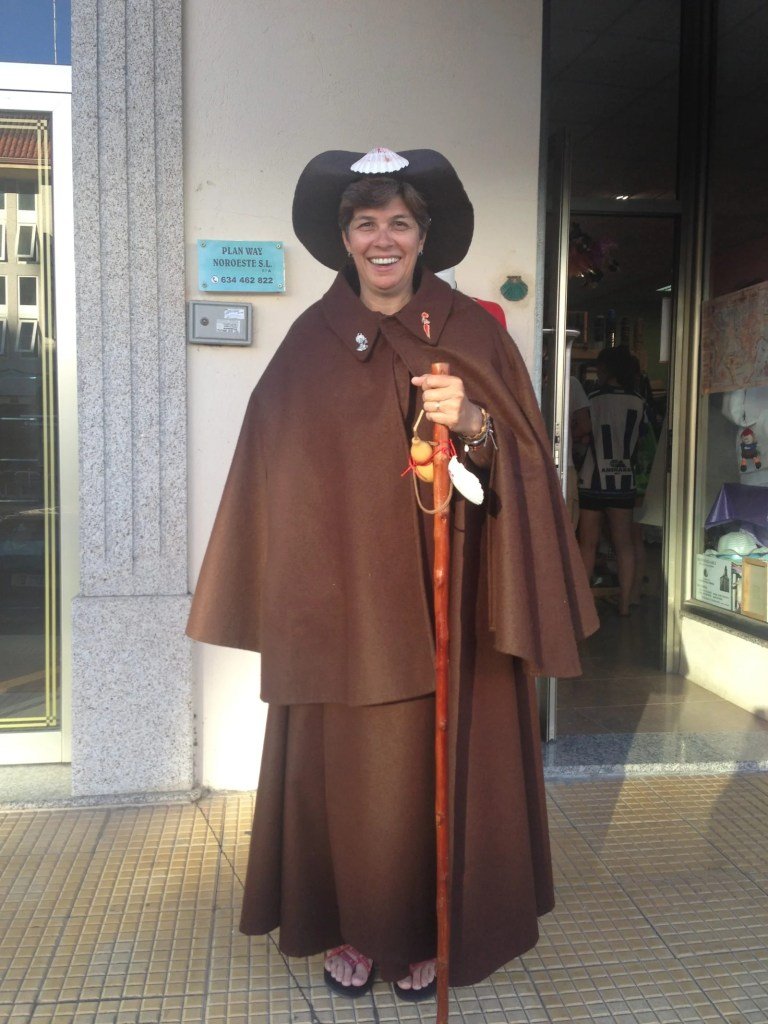
The commitment to visit the martyr’s tomb in Santiago was but the first step of an elaborately ritualized journey, one that mirrors the great round that is the movement behind pilgrimage everywhere. Departing pilgrims first sought out the special pilgrimage blessing of a local priest. In those days, the journey to Rome, Santiago, or Canterbury was considered so dangerous that it was uncertain whether you would even return. Leaving on pilgrimage without a blessing was inconceivable, as was leaving without your affairs in order. Letters called testimonials from the parish church enabled pilgrims to avoid accusations of “adventuring” or “profiteering.” With certificate in hand, pilgrims would assemble the traditional costume: a broadbrimmed hat, a scallop-shell badge indicating their passage, a satchel worn across the back called an escarcela, or scrip, and a bord6n, a “pilgrim’s staff” or walking stick.
All sacred journeys are marked by ritual ceremony. The departing pilgrims were celebrated with a Mass in which they took confession and communion, then the rites of the blessing of their walking staffs, satchels, and drinking gourds. Psalms were sung to “infuse courage into the hearts” of the pilgrims, then they put on their long cloaks and hats, recited the prayers of the Pilgrim’s Itinerarium, and set out with their fellow marchers down the long road.
“The journey of a thousand miles begins with one step”
Lao Tzu